Elbasan travel guide: 1466 Mehmed II castle, 1909 Albanian alphabet congress, Llixhat thermal baths (€15–25), Shkumbin rafting, 55 km from Tirana.
Elbasan (population 115,101, the country's fourth-largest municipality) sits on the old Roman Via Egnatia at the junction of the Shkumbin valley and the central Albanian plain. Its current walled town was built by Sultan Mehmed the Conqueror in 1466 as a forward base against Skanderbeg, but it was here, in 1909, that the Albanian National Congress confirmed the Latin alphabet still in use today. From Tirana it is a 55 km / 45–50 minute drive that often gets skipped — and shouldn't.
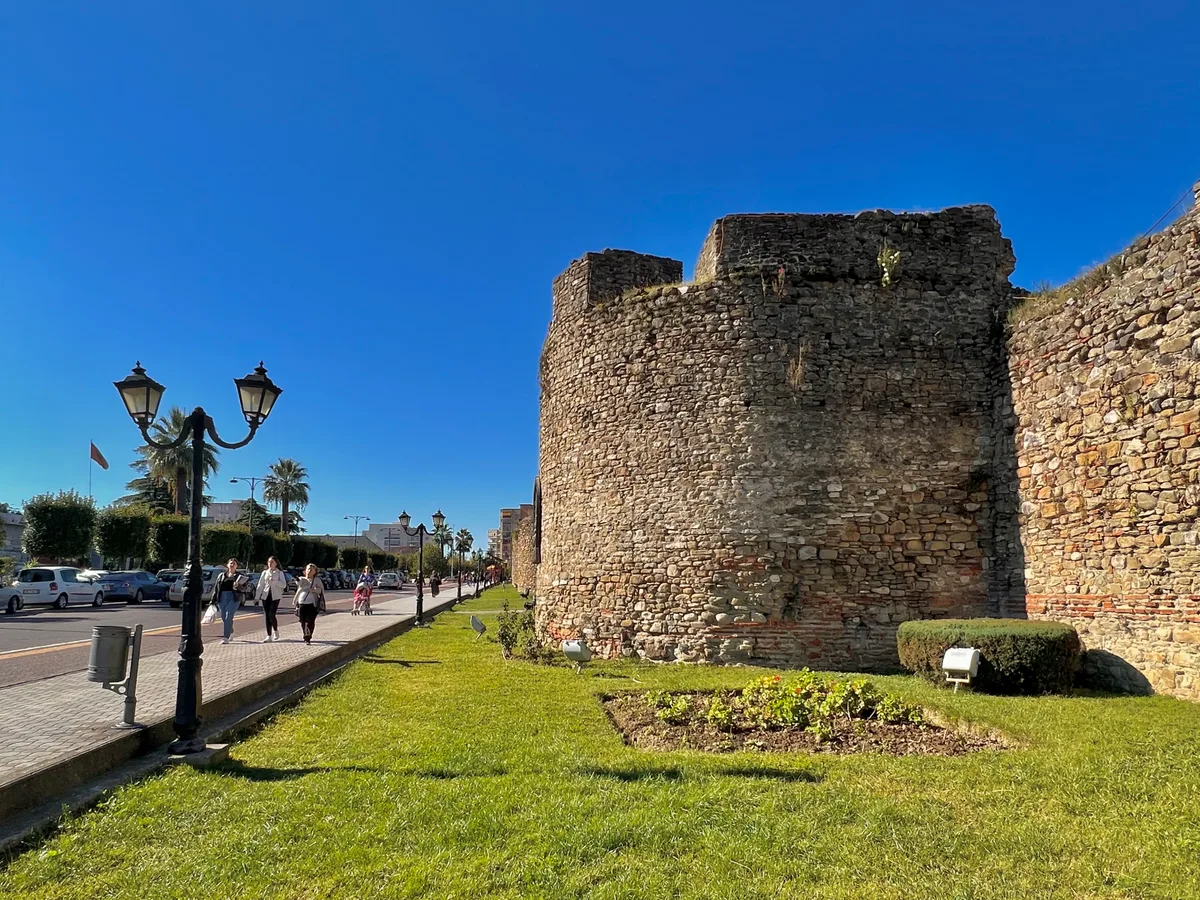
The Romans called the site Scampis and it sat on the Via Egnatia between Dyrrachium and Thessalonica. After Skanderbeg's revolt destabilised the central plains, Mehmed II built a new fortress here in 1466 and named it Elbasan ("country of the conqueror"); in 1467 Christians from Skopje and Ohrid were deported here to populate it. The walls and the surviving clock tower are essentially his work.
The pivotal modern moment came in September 1909, when the Albanian National Congress of Elbasan endorsed a single Latin-based alphabet for the Albanian language — settling a long-running dispute between Latin, Greek and Arabic-script proponents. The same year, Albania's first teachers' college, the Shkolla Normale e Elbasanit, opened in the city; many of the figures who would lead the independent republic after 1912 trained here.
The walled Elbasan Castle is essentially the city centre — wander freely along the surviving stretches of wall, the clock tower and the old houses inside. Within the walls, the Saint Mary Church preserves Onufri-school frescoes (free, daylight hours, donations welcomed). The Elbasan Ethnographic Museum, inside an 18th-century townhouse, presents traditional weavings, copperware and hearth life. The Bazaar Mosque (Xhamia e Pazarit) and the central pedestrian boulevard are best in the late afternoon when the local xhiro evening promenade is in full swing.
For active days, the Shkumbin River south of the city offers half-day rafting trips (around €20, typically 09:00–12:00 starts). On the slopes 7 km north, the Llixhat e Elbasanit thermal baths have been known since Roman times; modest hotel-spa packages run €15–25 per night including treatments. The thermal water is sulphurous and recommended for skin conditions and rheumatism.
If Albania has a national dish, it is Tavë Kosi — lamb baked under a yogurt-and-egg crust — and Elbasan claims to be its birthplace; the local version is sometimes called Tavë Kosi Elbasani or Tavë Elbasani. Try it at any traditional restaurant in the centre. Other local specialities: Bugaçe, the breakfast pastry stuffed with sausage and butter sold from bakery counters for 50–100 Lek; Ballokume, the maize-flour and butter biscuit baked for the Dita e Verës ("Summer Day") festival on 14 March; and Fërgesë Elbasani, the local twist on the central-Albanian peppers-and-cheese bake. Elbasan is not a wine destination; the local olive oil, however, is among the country's best.
April–May and September–October are ideal — 18–26 °C, low rain, manageable city heat. From Tirana, regular furgon minibuses leave the South Terminal for around 200 Lek and take 45–50 minutes; private taxi is around €30. One full day handles the castle, the museum and a thermal-bath afternoon; two days lets you add the Shkumbin rafting and Mount Krrabë drive.
| Population | 115,101 (municipality, 2023) |
|---|---|
| Elevation | 128 m |
| Distance from Tirana | 55 km / 45–50 min |
| Furgon fare | ~200 Lek |
| Castle | Free, walkable, 24/7 |
| Llixhat thermal baths | €15–25/night incl. treatments |
| Recommended stay | 1–2 days |
Elbasan sits exactly on the road from Tirana to Pogradec / Lake Ohrid, which makes it an ideal lunch stop. Drivers heading south can detour to Berat in about 1.5 hours. Albanian Eagle Tours' 3-day Tirana–Berat–Korçë–Pogradec private tour typically passes Elbasan at lunchtime and can include a castle stop on request; the longer 6-day Classic Albania tour can be customised to add a thermal-bath afternoon at Llixhat.
Yes, especially if you are interested in the Albanian National Awakening — the 1909 alphabet congress is one of the formative moments of modern Albanian identity, and it happened here.
The dish has multiple regional traditions, but Elbasan's claim is the strongest, and most Albanian cookbooks attribute the original recipe to the city. Order it for lunch in any traditional restaurant.
If you enjoy spa-style mineral waters, yes — the sulphur springs have been used since Roman times and modest spa hotels offer overnight stays with included treatments for €15–25 per person.
Furgon minibuses leave the South Terminal in Tirana every 30–45 minutes for around 200 Lek and take 45–50 minutes. By car the same trip is about 45 minutes via the SH3.
By 1909 Albanian was being written in three competing scripts — Latin (favoured by Catholic and many Tosk-speaking intellectuals), Greek (used by Orthodox communities) and Arabic (Ottoman administration and many Muslim writers). The Congress of Manastir in November 1908 had recommended a Latin alphabet; the Elbasan Congress in September 1909 confirmed it, established a national teachers' college (the Shkolla Normale), and effectively ended the alphabet wars. Most of the figures who led independent Albania after 1912 — including Aleksandër Xhuvani, who refined Albanian grammar — passed through the Elbasan teachers' college. The original building is preserved as a small museum on Bulevardi Qemal Stafa.
The Llixhat e Elbasanit thermal springs lie 7 km north of the city, near the village of Bradashesh. Roman use is documented; the springs were redeveloped in the 1960s as a state-run sanatorium and have since reopened as a small group of family-run spa hotels. Water temperatures range from 28 °C in some pools to 51 °C at source; the chemistry is sulphurous with calcium and magnesium, traditionally prescribed for rheumatism and certain skin conditions. Day-use entry is typically €5–10; overnight packages with treatments run €15–25 per person. Bring flip-flops and a swimsuit — robes are not always provided.
For active visitors, the Shkumbin River south of Elbasan offers half-day rafting trips at around €20 per person — typical 09:00 starts, 3 hours on the water, season is April through June. The Kraba mountain road back to Tirana (an alternative to the SH3 motorway) climbs through forests with panoramic viewpoints, taking around 1.5 hours instead of 45 minutes but rewarding with the country's least-crowded forest scenery.
Elbasan is the most-skipped of the central Albanian cities, partly because it lacks UNESCO status and partly because it lies just off the main southbound tourist axis. But for travellers interested in modern Albanian state-building (the alphabet, the teachers' college, Tavë Kosi), it is essential. Albanian Eagle Tours can build Elbasan into a multi-day itinerary as a half-day stop on the way to Pogradec and Korça — most efficiently within the 3-day Tirana–Berat–Korçë–Pogradec private tour. A private guide in Elbasan explains the alphabet politics in five minutes; without one, the museum and the alphabet monument can read as opaque.
Elbasan's significance in antiquity rested on its position on the Via Egnatia, the Roman road that ran from Dyrrachium (Durrës) on the Adriatic to Byzantium (Constantinople) on the Bosphorus. The road was built in the 2nd century BC under the Roman Republic and remained the principal east-west land route through the Balkans for more than a thousand years. Roman milestones, traces of paving and the small Roman bath complex of Scampis survive in the immediate area. Travellers driving from Tirana to Pogradec or to North Macedonia today follow essentially the same route. A short detour from the SH3 motorway near the village of Bradashesh leads to the Llixhat thermal baths and a small Roman site associated with the original Egnatia waystation.
Under communism, Elbasan was the country's main heavy-industrial city — the massive "Steel of the Party" metallurgical complex, opened in 1976, dominated the local economy until its post-1990 collapse. Some of the industrial structures still stand on the city's edges. Since 2010 the central walled city has been progressively restored, with new pedestrian streets and cafe culture; the agricultural Shkumbin valley around the city remains an important olive and tobacco region.
Stop in Elbasan en route east. Customise the 3-day Tirana–Berat–Korçë–Pogradec tour with Albanian Eagle Tours.
🗺 Central Albania — Explore Nearby
Each destination is reachable by private Car & Driver from Tirana. View all organised tours →
Plan your visit to Elbasan
How it works
Plan Your Visit to Albania
Choose how you want to explore
Listen to this destination's audio tour free — or book a private guided experience.
Open Audio Tour Book a Guided Tour