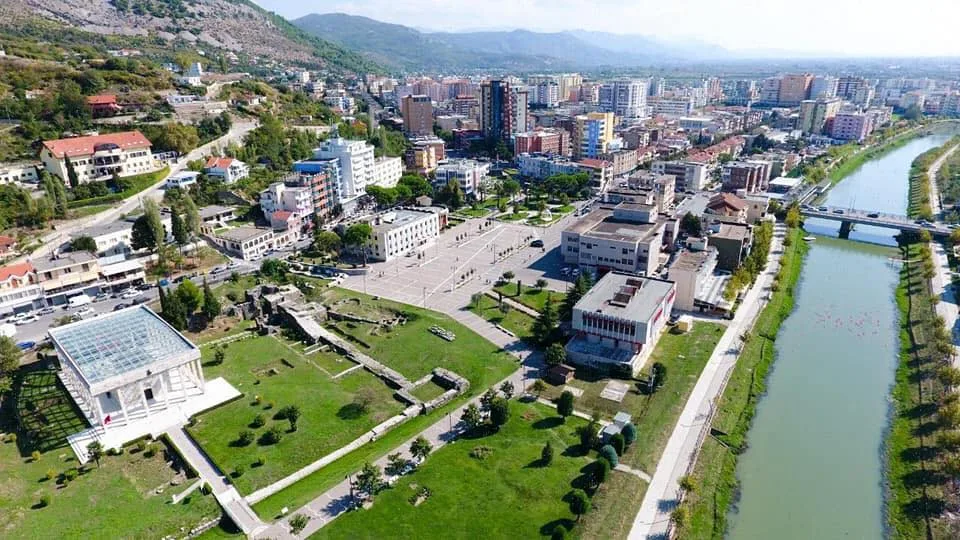
Lezhë travel guide: League of Lezhë (1444), Skanderbeg's mausoleum, Lezhë Castle (€1–2), Zadrima farm cuisine, Shëngjin beach, 1 hour from Tirana.
It was in Lezhë, on 2 March 1444, that Skanderbeg gathered the Albanian nobility and forged the League of Lezhë — the alliance that resisted the Ottomans for the next quarter century. He was buried here in 1468, in St. Nicholas Cathedral (later converted into the Selimie Mosque). The small modern city (14,687 in 2023) sits between the Drin delta and the Adriatic, 63 km / 1 hour up the SH1 from Tirana, and rewards a one-day visit with castle ruins, Skanderbeg's memorial, beach access and one of Albania's most acclaimed farm restaurants.
The site was settled by the 8th century BC and the Illyrian king Glaukias gave it walls in the late 4th century BC. The Macedonian king Philip V captured it in 211 BC; in 228 BC, the treaty that ended the First Illyrian War — concluded by Queen Teuta — explicitly forbade Illyrian ships from sailing south of Lissus. Vladislav Jonima ruled here as Count of Dioclea in 1319.
The League of Lezhë gathered Albanian noble houses — the Kastrioti, the Arianiti, the Dukagjini, the Thopia, the Muzaka and others — under Skanderbeg's command in the church of St. Nicholas. After his death in Lezhë on 17 January 1468, he was buried in the same church. When the Ottomans took the city in 1478, Mehmed II ordered Skanderbeg's tomb opened and his bones distributed as talismans among the soldiers — an extraordinary admission of how seriously the empire had feared him. The church was converted into the Selimie Mosque around 1520; today the converted ruin houses the Skanderbeg Memorial / Mausoleum, with a bronze bust, replica sword and helmet, and 15th-century fresco fragments.
Start at Lezhë Castle, perched 172 m above the city on the same Acrolissus ridge the Illyrians fortified. The walls combine Illyrian, Venetian and Ottoman stonework, and the panorama covers the Drin delta and Adriatic. Open 09:00–18:00 summer / 09:00–16:00 winter, entry €1–2.
The Skanderbeg Memorial in the converted Selimie Mosque is open daily except Monday, 09:00–13:00 and 15:00–18:00. The bronze bust marks the original burial spot; the surrounding floor inscription lists the noble houses of the 1444 League. Excavations of the Ancient Acropolis of Lissos are accessible from the castle path.
For coast and lagoon, Shëngjin Beach is 8 km north-west — sandy, family-friendly and the closest swimming to Tirana that does not require the southern Riviera drive. The Kune-Vain-Tale Lagoon just south of Shëngjin is one of the country's best birdwatching wetlands; small boat tours run from the village in spring and autumn.
Lezhë's hinterland — the fertile Zadrima plain — is the cradle of Albania's slow-food and agritourism movement. The most famous address is Mrizi i Zanave, the farm restaurant founded by chef Altin Prenga in the village of Fishtë, 15 minutes inland: tasting menus built around the family's own goat cheeses, smoked meats, byrek and seasonal vegetables. Booking is essential. Other Zadrima producers offer farm visits with cheeses aged in wine, smoked sausages, corn and spinach byrek and petulla fritters served with honey. The local wine is Kallmet, an indigenous deep-red grape; the village of Kallmet itself, where the variety originates, is 20 minutes north.
April–June and September–October are ideal: 18–28 °C, low rain, lagoons full of birds and the farms at peak. From Tirana, Lezhë is a straightforward 1-hour drive on the SH1 motorway; buses leave roughly hourly from Tirana's North & South terminal. One full day handles the castle, mausoleum, a Mrizi i Zanave lunch and a Shëngjin sunset; an overnight is recommended if you want to add the lagoon birdwatching.
| City population | 14,687 (2023) |
|---|---|
| Elevation | 172 m city / 413 m Acrolissus |
| Distance from Tirana | 63 km / 1 hr |
| Lezhë Castle | €1–2; 09:00–18:00 summer |
| Skanderbeg Mausoleum | 09:00–13:00 / 15:00–18:00, closed Mondays |
| Best time | April–June, September–October |
| Recommended stay | 1 day (overnight for lagoon) |
Lezhë sits on the Tirana–Shkodra axis, exactly halfway between the two. Most well-paced itineraries stop here for lunch and the mausoleum on day 1 of a northern circuit, then continue to Shkodra and the Albanian Alps. Albanian Eagle Tours' 3-day Theth village tour and 2-day Valbona–Prizren tour both pass through this corridor; the broader 6-day Classic Albania tour can include Lezhë on request as a Skanderbeg-pilgrimage stop linking Krujë (where he raised the flag), Lezhë (where he united the nobility) and the southern UNESCO cities (where his unfinished resistance ended).
It was the alliance of Albanian noble houses formed in Lezhë on 2 March 1444 under Skanderbeg's leadership. It coordinated military, financial and diplomatic resistance to the Ottoman Empire until Skanderbeg's death in 1468.
He was originally buried in St. Nicholas Cathedral here in 1468. After the Ottomans took the city in 1478, Mehmed II had the tomb opened. The bronze bust in today's mausoleum marks the historic burial site.
63 km / 1 hour by car on the SH1 motorway. Furgon minibuses run from Tirana's bus terminal for around 300 Lek.
Yes — it is widely regarded as Albania's best farm-to-table restaurant and is one of the few in the country with international culinary reputation. Reserve at least a week ahead in summer.
Chef Altin Prenga opened Mrizi i Zanave in 2010 in his family farmhouse in Fishtë, 15 minutes inland of Lezhë. The restaurant transformed Albanian agritourism by sourcing exclusively from the surrounding Zadrima plain — goat cheese aged in wine, prosciutto cured by Altin's brother, vegetables from the kitchen garden, bread from the wood oven. A multi-course tasting menu typically runs €25–35 per person plus wine; reservations are essential, often two to three weeks ahead in summer. Several of Mrizi's suppliers — including Mrizi i Pulavet, the family's chicken farm, and the small Zadrima Sheep Cheese producers — also welcome visits with prior arrangement. The wider movement has spawned half a dozen smaller farm-table operations within 30 minutes of Lezhë.
Shëngjin (8 km north-west of Lezhë) is a sandy Adriatic beach town that fills with domestic visitors in July–August but is calm and pleasant in May–June and September. Hotel rooms run €40–80 per night in season. The adjacent Kune-Vain-Tale Managed Reserve protects 4,000 hectares of lagoon, wetland and pine forest — one of the most important migratory bird sites on the Adriatic. Boat tours run from Shëngjin or Tale village in spring and autumn for €15–25 per person.
The village of Kallmet, 20 minutes north of Lezhë, gives its name to one of Albania's two flagship indigenous red grapes (the other is Shesh i Zi). Several small producers in the village welcome visits — Kantina Kallmet and a handful of family wineries offer tastings for €10–20 per person, often paired with local cheese. The wine itself is deep-coloured, medium-bodied with sour cherry and herb notes, and pairs beautifully with the Zadrima farm cheeses. Combine a Kallmet visit with Mrizi i Zanave for a memorable food day.
Lezhë's importance is essentially historical — the town today is small and the surviving fabric of the League of Lezhë gathering is concentrated in the converted Selimie Mosque mausoleum. Without context, the visit can feel slight. With a guide explaining the political mechanics of 2 March 1444 (which noble houses joined, which were absent, what each pledged), the Skanderbeg story becomes a study in successful coalition-building rather than a romantic legend. Albanian Eagle Tours can include Lezhë as part of a Skanderbeg-themed private day pairing it with Krujë (where Skanderbeg raised the flag) and the Berat siege.
Lezhë sits at the southern edge of the wider Drin delta — a 100 km² wetland complex where the Drin, Buna and Mat rivers approach the Adriatic. The delta hosts one of the largest concentrations of waterbirds in the Mediterranean: white-tailed eagles, pygmy cormorants, glossy ibis, and the Dalmatian pelicans that breed at Karavasta further south but feed across the wider delta. The Kune-Vain-Tale Managed Reserve protects 4,000 hectares of lagoon, pine forest and saltmarsh just north of Shëngjin. Birdwatching boat trips run from Tale and Shëngjin in spring and autumn for €15–25 per person. For travellers combining birding with the Skanderbeg history, plan an early morning at the lagoon followed by the castle and mausoleum after lunch.
Walk in Skanderbeg's footsteps. Add Lezhë to a private Albanian Eagle Tours itinerary — the 6-day Classic Albania tour covers his entire historical arc.
🗺 North Albania — Explore Nearby
Each destination is reachable by private Car & Driver from Tirana. View all organised tours →
Plan your visit to Lezhë
How it works
Plan Your Visit to Albania
Choose how you want to explore
Listen to this destination's audio tour free — or book a private guided experience.
Open Audio Tour Book a Guided Tour