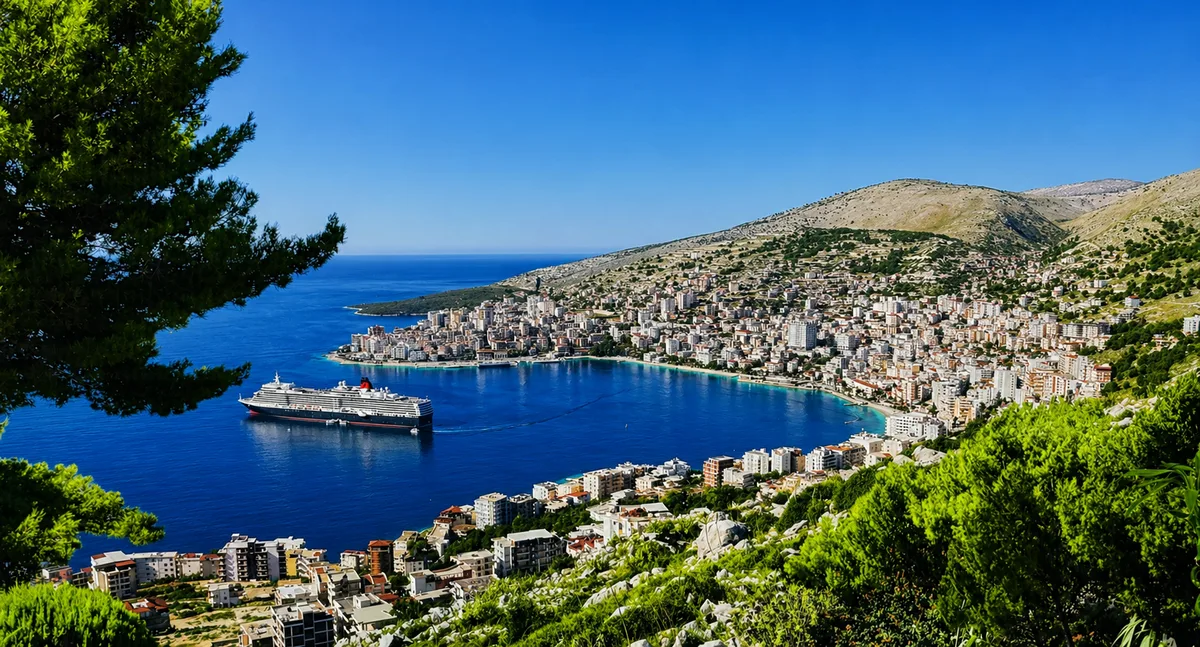
Saranda, Ksamil and Butrint travel guide: UNESCO ancient city (€8–10), Ksamil islands kayak, Lekuresi Castle, 40 martyrs, 4–5 hr from Tirana.
Three places, one trip. Butrint — UNESCO World Heritage Site since 1992 — is one of the Mediterranean's most layered ancient cities, occupied since the 10th–8th century BC. Ksamil (population 2,731) is the white-sand archipelago of small islands just north, the most photographed beach destination on the Ionian. Saranda (population 19,882) is the modern port town that sleeps you, feeds you and looks across to Corfu, 14 km away. From Tirana the drive is 280 km / 4–5 hours; plan 3–5 days.
According to Virgil, Butrint was founded by the Trojan seer Helenus after the fall of Troy. Archaeology dates the first Greek settlement here to the 8th century BC. Julius Caesar made it a Roman colony in 44 BC; Augustus reaffirmed it in 31 BC after Actium. Charles I of Anjou took the city in 1267 and rebuilt the Basilica. Ottoman expansion eventually emptied it; in October 1798 Ali Pasha of Tepelenë conquered Butrint and built the small fort that still guards the channel.
Saranda's name commemorates the 40 martyrs killed under Diocletian in the early 4th century — the Greek saranta means "forty". The town held one of the earliest Jewish synagogues in the Balkans (4th–5th century), reportedly founded by Jewish captives brought after the Roman destruction of Jerusalem in 70 CE — its mosaic floor is now displayed in Saranda's archaeological museum. Modern Ksamil is, by contrast, almost entirely a communist creation: founded in 1966 as an agricultural settlement, it only became a tourist village after 1990.
Butrint National Park opens 08:00–20:00 in summer (shorter winter hours), entry €8–10 adult. Plan 2.5–3 hours on site. Highlights include the Greek theatre (3rd century BC, partly underwater), the Baptistery mosaic floor (6th century AD, a pavement of paired animals — usually covered with sand for protection but uncovered for special openings), the massive Lion Gate (4th century BC), and the Ali Pasha Castle guarding the Vivari Channel. The route through the park is well-signposted and largely shaded.
Ksamil is a beach day. Public beaches are free; chair-and-umbrella rental on the better-organised stretches is €5–15 per set. Hire a kayak (~€10/hour) and paddle the 200 m to the three small islands — water clarity is exceptional. Larger boat tours from Ksamil run €30–60 per person and include Mirror Beach and Krorëz cove. Lekuresi Castle, on a hill above Saranda, gives the best sunset view over Corfu (free entry; the on-site restaurant is reservable).
Buses connect the three sites cheaply: Saranda–Butrint 20 minutes / €1, Saranda–Ksamil 15 minutes / €1, both running every 30–60 minutes in summer.
The brackish lagoon at Butrint produces the country's best mussels (midhje), often farmed and sold in the small Mali i Robit and Ksamil restaurants. Order grilled sea bass (levrek), spit-roasted lamb (qengj në hell), byrek, and the local Kallmet red wine. Saranda's seafront has a long line of fish restaurants; Demi and Lim are reliable. Finish with a glass of rakia.
May–June and September–October are ideal — sea is warm enough to swim, Butrint is comfortable to walk and Ksamil's hotels are not yet fully booked. July and August see Ksamil at its busiest (often packed solid by Albanian and Italian holidaymakers); March–April and November are quiet but most beach amenities close. Plan 3–5 days: one beach day in Ksamil, half a day at Butrint, an evening at Lekuresi Castle, and a day for the Blue Eye spring (28 km, 40 minutes north) and Gjirokastër (1.5 hours).
| Saranda population | 19,882 (2023) |
|---|---|
| Ksamil population | 2,731 (2023) |
| Butrint UNESCO | 1992 |
| Distance from Tirana | 280 km / 4–5 hr |
| Butrint entry | €8–10, 08:00–20:00 summer |
| Saranda–Butrint bus | 20 min, €1 |
| Recommended stay | 3–5 days |
The whole southern Ionian coast is reachable from Saranda. Drive 30 minutes north to Borsh, an hour to Himarë and Dhërmi, and 2 hours over the Llogara Pass to Vlora. Inland, Gjirokastër is 1.5 hours, the Blue Eye 40 minutes. Albanian Eagle Tours' 3-day Albanian Riviera, Butrint and Gjirokastër private tour is built around this triangle; the longer 6-day Classic Albania tour includes Saranda and Butrint as the southern endpoint of a complete country loop.
Yes — emphatically. It is one of the most layered archaeological sites in the Mediterranean, with continuous stratigraphy from Greek to Roman to Byzantine to Venetian to Ottoman, in a single walkable park. Allow 2.5–3 hours.
Yes — Corfu is 14 km across the channel and clearly visible. Daily ferries run from Saranda port to Corfu (Lefkimmi or Corfu Town) in 30–70 minutes for €20–25 one way.
Very. July and August see Albanian and Italian holidaymakers fill the village's hotels and beaches solid. May, June, September and early October are far calmer with similar water temperatures.
Stay in Saranda or Ksamil. Day 1: Butrint (morning) + Ksamil afternoon. Day 2: Ksamil beaches and boat tour. Day 3: Lekuresi sunset and the Blue Eye on the way out. Public buses link all three.
Butrint is the most layered archaeological site in Albania. A logical 2.5–3 hour route: enter via the Vivari Channel gate, walk first to the Greek theatre (3rd century BC, partly underwater because the water table has risen). Continue clockwise to the Asclepion (Greek temple to the healing god) and the Roman Forum. Then the Baptistery with its 6th-century paired-animal mosaic floor — usually covered with sand for protection but uncovered on special openings. Continue to the massive Lion Gate (4th century BC, with carved lion-and-bull relief above the lintel) and the Cyclopean Walls. Climb to the Acropolis Museum on the highest point (Venetian castle re-fitted as a small museum). Cross the Vivari Channel by chain-pulled raft (free, included in entry) to Ali Pasha Castle (1798) for the panoramic return view.
The four small islands offshore from Ksamil are the village's iconic image. The two closest are reachable by an easy 200-metre swim or kayak (€10/hour rental); a 30–60 minute walk along the beach takes you to the southern islands' best access points. Boat tours from Ksamil's marina run €30–60 per person and add Mirror Beach, Krorëz cove and the small Pasqyrat islands further south. Public beaches in Ksamil are free; chair-and-umbrella rental on the better-organised stretches runs €5–15 per set per day.
Saranda's promenade is best at evening, when the lights of Corfu come on across the channel. The Saranda synagogue floor mosaic (4th–5th century, possibly the oldest archaeological evidence of Jewish presence in the Balkans) is preserved at the small Saranda Archaeological Museum near the port. Lekuresi Castle above the city offers the best sunset view; the on-site restaurant is reservable.
Saranda fills with Albanian, Italian and Polish coach tours in summer — Butrint at 11:00 in July can mean 800 visitors at a time on the same circuit. A private guided trip lets you arrive at 09:00 (when the gate opens) and have the Greek theatre to yourself, before pivoting to a quiet Ksamil beach for the afternoon. Albanian Eagle Tours' 3-day Albanian Riviera, Butrint UNESCO and Gjirokastër private tour sequences the southern triangle around the cruise-ship rhythms.
Saranda is the disembarkation port for cruise-ship excursions to Butrint — typically two to four ships per week in high season, each landing 200–500 day-trippers who arrive at Butrint between 10:30 and 14:00. The site can feel overwhelmed during these windows. The trick for independent travellers is timing: arrive at the Butrint gate at 08:00 when it opens and complete the main circuit before the coaches arrive. Alternatively, visit in the late afternoon (16:00–19:00) when the coaches have left and the site cools. Ksamil's beaches face similar pressures in July and August. Spring and autumn give the cleanest experience for both — same temperatures, same sea, dramatically smaller crowds.
Book the Ionian coast with a guide. Choose the 3-day Riviera, Butrint & Gjirokastër tour with Albanian Eagle Tours.
🗺 South Albania — Explore Nearby
Each destination is reachable by private Car & Driver from Tirana. View all organised tours →
Plan your visit to Sarandë & Butrint
🏛 Related Reading
How it works
Plan Your Visit to Albania
Choose how you want to explore
Listen to this destination's audio tour free — or book a private guided experience.
Open Audio Tour Book a Guided Tour