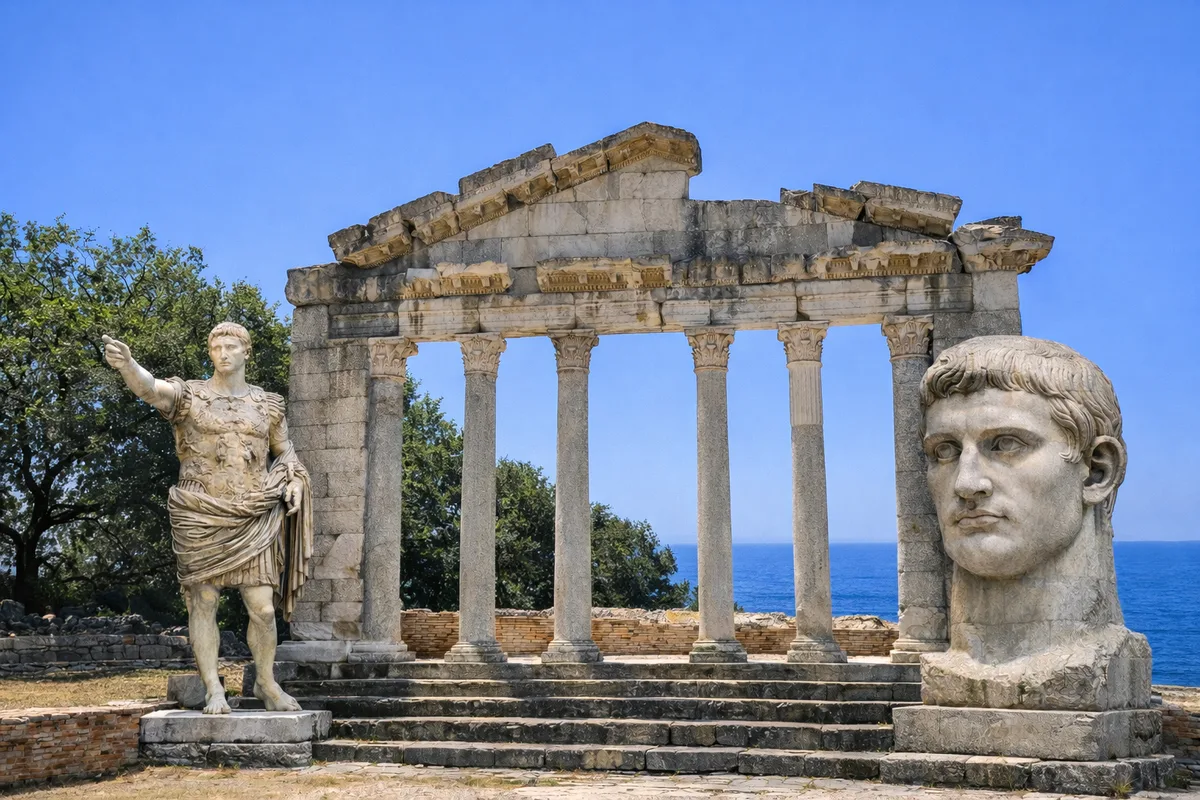
Απολλωνία: ελληνική αποικία Κορίνθου-Κερκύρας του 600 π.Χ., όπου σπούδαζε ο Οκταβιανός Αύγουστος. Πλήρης οδηγός με ώρες και τιμές.
Η Απολλωνία είναι η αρχαία ελληνική πόλη που ιδρύθηκε γύρω στο 600 π.Χ. από Έλληνες αποίκους από την Κόρινθο και την Κέρκυρα υπό την ηγεσία του Γύλακα — και έγινε ένα από τα σημαντικότερα εμπορικά κέντρα της Ανατολικής Αδριατικής. Εδώ, στις 15 Μαρτίου 44 π.Χ., ο 18χρονος Οκταβιανός (μετέπειτα Αύγουστος) σπούδαζε φιλοσοφία και ρητορική όταν έφτασε η είδηση της δολοφονίας του Ιουλίου Καίσαρα. Η πόλη, εγκαταλειμμένη ως τον 4ο αιώνα μ.Χ. μετά τον σεισμό του 3ου αιώνα που κατέκλυσε με ιλύ το λιμάνι της, στέκει σε ένα λοφώδες οροπέδιο 250 μέτρα πάνω από την σύγχρονη κοιλάδα της Βγιόσας, 130 χλμ. και 2-2,5 ώρες νοτιοδυτικά από τα Τίρανα. Για κάθε Έλληνα ταξιδιώτη που έχει διαβάσει Αριστοτέλη, Πολύβιο ή Ξενοφώντα, η Απολλωνία είναι μια αναγκαία στάση — η μεγάλη αδελφή πόλη του Δυρραχίου, με όρους ιστορικού μεγέθους και ελληνικής συμβολής στη Νότια Ιλλυρία.
Η αποικία ονομαζόταν αρχικά Γυλάκεια, από τον Κορίνθιο ιδρυτή της Γύλακα· μετονομάστηκε σε Απολλωνία γύρω στο 588 π.Χ. προς τιμήν του Απόλλωνα — η ίδια πρακτική ονοματοδοσίας που γνωρίζουμε από την κορινθιακή Δύρραχιο/Επίδαμνο, την κορινθιακή Συρακούσα και τις άλλες κορινθιακές αποικίες. Στη ελληνιστική περίοδο ο πληθυσμός της μπορεί να έφτασε τους 60.000 — μία από τις μεγαλύτερες ελληνικές πόλεις της Αδριατικής, αξιοσημείωτη και κατά τα κλασικά ελληνικά μέτρα. Η αναφορά του Αριστοτέλη στα Πολιτικά (V.6) περιγράφει το πολίτευμα της Απολλωνίας ως υποδειγματική «μετριοπαθή ολιγαρχία», όπου η μειοψηφία των Ελλήνων αποίκων κυβερνούσε αρμονικά την πλειοψηφία των γηγενών Ιλλυριών — ένα παράδειγμα που οι Έλληνες πολιτικοί στοχαστές του 4ου αιώνα μελετούσαν.
Η αρχαιότερη στρατιωτική ιστορία της πόλης περιλαμβάνει την περίφημη νίκη επί των Αμάντων στο Θρόνιον (περίπου 450 π.Χ.), την οποία η πόλη τίμησε στήνοντας μνημείο νίκης στην Ολυμπία — έργο γνωστό από αναφορές του Παυσανία. Η ρωμαϊκή κυριαρχία ήρθε το 229 π.Χ. μετά τον Α' Ιλλυρικό Πόλεμο. Η πιο γνωστή ιστορία της πόλης είναι ο ρόλος της στην άνοδο του πρώτου Ρωμαίου αυτοκράτορα: το 44 π.Χ., ο νεαρός Οκταβιανός — υιοθετημένος γιος και ανιψιός του Καίσαρα — ολοκλήρωνε την εκπαίδευσή του στην Απολλωνία υπό τον φιλόσοφο Αθηνόδωρο τον Καναΐτη. Όταν έλαβε την είδηση της δολοφονίας του Καίσαρα, σε λίγες εβδομάδες πέρασε την Αδριατική, διεκδίκησε το όνομα του Καίσαρα και ξεκίνησε την πολιτική πορεία που 17 χρόνια αργότερα θα τον έκανε Αύγουστο. Το τέλος ήρθε γεωλογικά: σεισμός του 3ου αιώνα μ.Χ. εκτρέπει τη Βγιόσα, καταχωνιάζοντας με ιλύ το λιμάνι και ουσιαστικά αποκόπτοντας την πόλη από το θαλάσσιο εμπόριο. Ως τον 4ο αιώνα μ.Χ. η Απολλωνία ήταν εγκαταλελειμμένη. Η UNESCO την πρόσθεσε στον Πίνακα Δυνατότητας το 2014.
Ο χώρος είναι μεγάλος αλλά συμπαγής — οι περισσότεροι κύριοι μνήμοι βρίσκονται σε διαδρομή 30 λεπτών περιπάτου. Το Βουλευτήριο (Bouleuterion) — το ρωμαϊκό κτίριο διοίκησης του 2ου αιώνα μ.Χ. με την εμβληματική εξάστηλη πρόσοψη — είναι το λογότυπο της Απολλωνίας και η πιο γνωστή της εικόνα. Πίσω του, το Ωδείο, μικρή ρωμαϊκή αίθουσα συναυλιών 300 θέσεων. Το ελληνιστικό θέατρο, μερικώς ανασκαμμένο, χωρούσε αρχικά περίπου 7.000 θεατές — ένα από τα μεγαλύτερα της δυτικής Ιλλυρίας. Η Στοά (μακρό κιονοστοιχημένο πορτάλι) όριζε την άνω πόλη. Στον Ναό του Απόλλωνα σώζονται θεμέλια και κιονόκρανα. Το Νυμφαίο και τα ρωμαϊκά μωσαϊκά οικιακά συμπλέγματα είναι μερικώς ανασκαμμένα — μερικά παραμένουν σκεπασμένα με άμμο για προστασία.
Η Μονή της Παναγίας (13ος αιώνας) χτίστηκε απευθείας μέσα στα τείχη της αρχαίας πόλης από βυζαντινούς μοναχούς που εκμεταλλεύτηκαν τα ελληνιστικά υλικά. Διατηρεί τοιχογραφίες της παλαιολόγειας περιόδου (13ος-14ος αι.) — ένα σπάνιο παράδειγμα συνέχειας από την κλασική στη βυζαντινή και από τη βυζαντινή στη μεταβυζαντινή ορθόδοξη παράδοση. Σήμερα στεγάζει το Αρχαιολογικό Μουσείο της Απολλωνίας με αγάλματα, ψηφιδωτά, προτομές και τα ευρήματα των ανασκαφών. Ώρες πάρκου: Μάιος-Οκτώβριος 09:00-19:00 καθημερινά· Νοέμβριος-Απρίλιος 09:00-16:00 Τρίτη-Κυριακή (κλειστά Δευτέρες). Είσοδος 600 ALL (περίπου 6 ευρώ) για ενήλικες, δωρεάν για παιδιά 0-12, εκπτώσεις για φοιτητές και επισκέπτες με αναπηρία. Υπολογίστε 2-4 ώρες για πλήρη επίσκεψη.
Γύρω από την Απολλωνία, στα χωριά Πογιάν, Λεβάν και Φιερ, οι ταβέρνες σερβίρουν παραδοσιακή κουζίνα της Μυζεκής. Δοκιμάστε fërgesë με πιπεριές και λευκό τυρί, byrek με σπανάκι ή πράσο, αρνί ψητό σε πήλινα σκεύη, ψάρι από τις γειτονικές λιμνοθάλασσες (λαβράκι, μύδια Καραβάστα). Η περιοχή είναι από τις σημαντικότερες οινοπαραγωγικές της Αλβανίας — ζητήστε Shesh i Bardhë και Shesh i Zi, τα αυτόχθονα σταφύλια του χωριού Σες. Στο Vlosh νότια της Αυλώνας υπάρχει η ομώνυμη ποικιλία ροζέ. Πλήρες γεύμα με κρασί 12-18 ευρώ ανά άτομο σε τοπικές ταβέρνες.
Από Ιωάννινα: 3 ώρες (170 χλμ.) μέσω Κακαβιάς-Αργυροκάστρου-Τεπελενίου-Φιερ-Απολλωνίας. Η πιο γραφική διαδρομή από Ελλάδα. Από Σαράντα (αν έρχεστε από Κέρκυρα μέσω φέρι): 2 ώρες οδικώς βόρεια. Από Τίρανα: 130 χλμ. / 2-2,5 ώρες νότια στον Α2 και SH4 μέσω Φιερ. Δεν υπάρχει δημόσια συγκοινωνία απευθείας στον αρχαιολογικό χώρο — οι περισσότεροι ταξιδιώτες μένουν στο Φιερ ή στο Μπεράτι και κάνουν ημερήσια εκδρομή με ιδιωτικό αυτοκίνητο ή ταξί (10 ευρώ από Φιερ, 25 ευρώ από Μπεράτι).
Δεν υπάρχει αξιόλογη διαμονή στο ίδιο το αρχαιολογικό χωριό. Διαμονή στο Φιερ (15 χλμ., εμπορικά ξενοδοχεία 35-55 ευρώ τη βραδιά) ή — πολύ καλύτερη επιλογή — στο Μπεράτι UNESCO (1 ώρα ανατολικά, αναπαλαιωμένα οθωμανικά αρχοντικά 50-100 ευρώ) ή στην Αυλώνα (35 χλμ. νότια, παραλιακά ξενοδοχεία 50-90 ευρώ). Ιδανικός συνδυασμός: Απολλωνία + Καραβάστα (η ολοκληρωμένη ημέρα κορινθιακής αποικιακής ιστορίας και νοτιοευρωπαϊκής ορνιθοπανίδας) — η Απολλωνία & λιμνοθάλασσα Καραβάστα καλύπτει αυτή τη διαδρομή. Απολλωνία + Βυλλίδα για την καλύτερη ημέρα ελληνιστικής αρχαιολογίας στην Αλβανία. Απολλωνία + Μπεράτι για συνδυασμό κλασικής και βυζαντινής/οθωμανικής κληρονομιάς. Η 6ήμερη περιήγηση Αλβανία UNESCO συμπεριλαμβάνει την Απολλωνία ως φυσικό σταθμό στον άξονα Νότου.
Άνοιξη (Απρίλιος-Ιούνιος) και φθινόπωρο (Σεπτέμβριος-Οκτώβριος) είναι ιδανικά: 18-28 °C, χλωρή Μυζεκή, αγριολούλουδα στους λόφους. Καλοκαίρι (Ιούλιος-Αύγουστος) είναι πολύ ζεστό (32-36 °C) στο εκτεθειμένο οροπέδιο — αν επισκεφθείτε τότε, πηγαίνετε νωρίς το πρωί ή αργά το απόγευμα. Φέρτε καπέλο, νερό και αντηλιακό σε όλες τις εποχές — υπάρχει ελάχιστη σκιά στον χώρο. Χειμώνας: το Μουσείο και η Μονή είναι ανοιχτά (09:00-16:00 Τρίτη-Κυριακή), αλλά η εξωτερική επίσκεψη είναι λιγότερο άνετη.
Για τον Έλληνα ταξιδιώτη που γνωρίζει την Ολυμπία, την Επίδαυρο, τους Δελφούς ή τη Δωδώνη, η Απολλωνία προσφέρει μια αξιοσημείωτη παράλληλη εμπειρία. Η αρχιτεκτονική των δημοσίων κτιρίων είναι όμοια με αυτή των ελληνικών πόλεων-κρατών — το βουλευτήριο, το ωδείο, το θέατρο, η αγορά, ο ναός του Απόλλωνα ακολουθούν τις ίδιες σχεδιαστικές αρχές με τους αντίστοιχους χώρους της Επιδαύρου ή της Πριήνης. Η μεγαλύτερη διαφορά βρίσκεται στο τέλος: ενώ οι ελληνικές πόλεις του νότου συνέχισαν να κατοικούνται μέσω της βυζαντινής εποχής, η Απολλωνία εγκαταλείφθηκε γεωλογικά τον 4ο αιώνα — γεγονός που διατήρησε την ελληνιστική και πρωτοχριστιανική της δομή σε εξαιρετική κατάσταση χωρίς μεταγενέστερες προσθήκες. Η βυζαντινή Μονή της Παναγίας (13ος αι.) που χτίστηκε αργότερα μέσα στα τείχη είναι μάρτυρας της σπάνιας περίπτωσης όπου η ελληνική κλασική και η βυζαντινή ορθόδοξη κληρονομιά συναντώνται σε ένα ενιαίο σύνολο.
Στην κορινθιακή — όπως η αδελφή πόλη Δυρράχιο/Επίδαμνος (627 π.Χ.), η Συρακούσα (734 π.Χ.) και η Αμβρακία (γύρω 625 π.Χ.). Οι Κορίνθιοι και οι Κερκυραίοι ήταν οι μεγαλύτεροι αποίκοι της Αδριατικής τον 7ο-6ο αιώνα π.Χ.
Όχι — δεν χρησιμοποιείται για παραστάσεις σήμερα. Είναι μερικώς ανασκαμμένο και προσφέρει πανοραμική θέα. Σε ορισμένες ειδικές περιστάσεις (πολιτιστικά φεστιβάλ) γίνονται περιορισμένες παραστάσεις.
2-3 ώρες για τα κύρια μνημεία και το μουσείο της Μονής. 4 ώρες αν θέλετε να δείτε όλο τον χώρο, να ξεκουραστείτε στη σκιά της Μονής και να χαρείτε τη θέα της κοιλάδας. Συνδυασμός με Καραβάστα ή Βυλλίδα κάνει εξαιρετική ολοήμερη εκδρομή.
Ναι. Ο χώρος είναι ασφαλής, προσφέρει εύκολο περπάτημα σε χαλικόστρωτα μονοπάτια, χωρίς απότομες κλίσεις. Ο μεγάλος ελεύθερος χώρος και η Μονή με τα ψηφιδωτά αρέσουν στα παιδιά. Φέρτε νερό και καπέλο — λίγη σκιά.
How it works
Plan Your Visit to Albania
Choose how you want to explore
Akousteite tin xenagisi ihou dorean — e kleiste idiotiki xenagisi.
Anoichti Audio Tour Kleisteite Tour